Senior Economist, Monetary Policy · Central Bank of Malta | PhD, Paris School of Economics
I study how information anticipates macroeconomic stress — in central bank language, retail prices, news flows, and capital movements. My work combines econometrics with LLMs and alternative data to build early-warning and nowcasting tools for policymakers.
At the Central Bank of Malta, I prepare briefing materials for the Governor ahead of ECB Governing Council meetings and conduct research on monetary policy transmission, inflation dynamics, and market reactions to central bank announcements — providing direct exposure to eurozone policy implementation in real time.
My current research spans three areas: measuring how ECB announcements generate market uncertainty through a novel OIS-based approach; classifying political pressure on the Federal Reserve using LLMs to study its effect on asset prices and Fed credibility; and nowcasting Maltese inflation from high-frequency web-scraped retail prices.
Prior to joining the CBM, I worked at the IMF on emerging market economies, sovereign debt, and capital flows, and at the OECD as an external consultant on economic policy analysis. My PhD at the Paris School of Economics (2022, supervised by Prof. Agnès Bénassy-Quéré) examined financial crises prediction, institutional forecast errors, and a novel textual dataset of IMF archival documents.
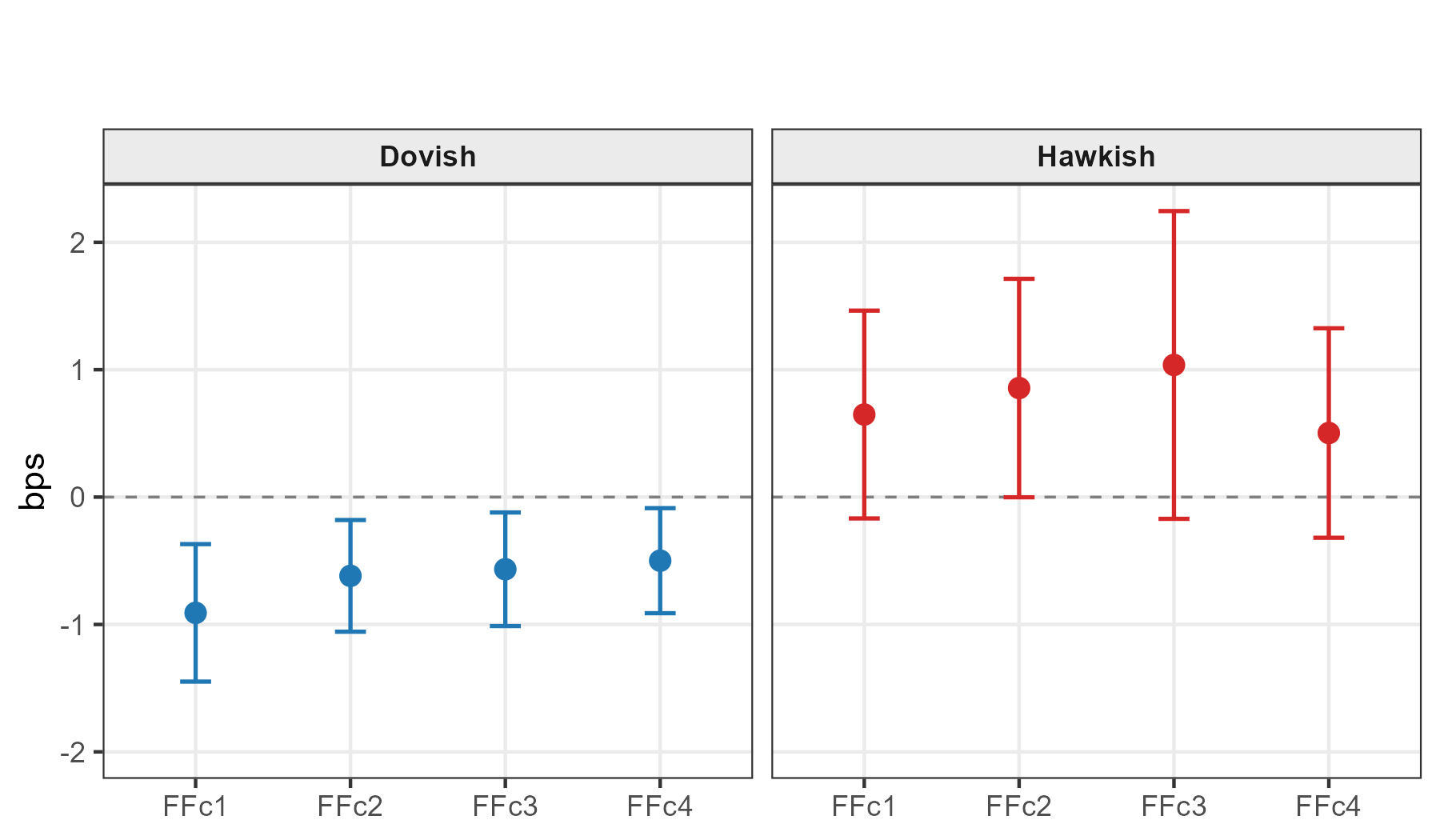
We introduce a novel market-based measure of monetary policy uncertainty: the difference in the standard deviation of OIS rates in a three-day window around ECB policy announcements. ECB announcements generally increase market uncertainty about future interest rates, regardless of the sign of the policy surprise. This increased uncertainty significantly impacts asset prices — raising nominal yields, lowering stock market returns, and increasing Euro exchange rate volatility.
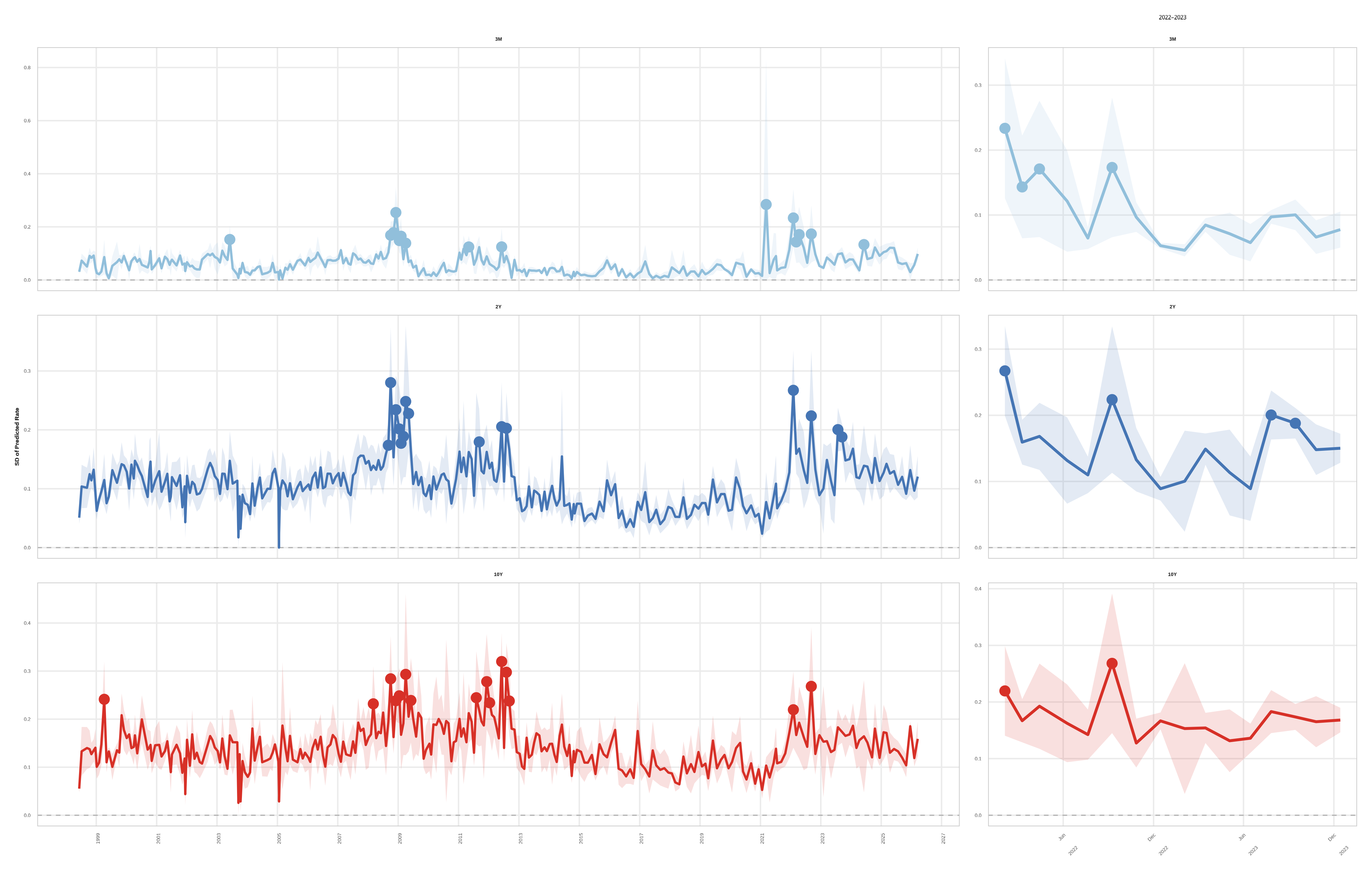
Traditional high-frequency identification of monetary policy communication effects operates ex-post, precluding evaluation of alternative strategies before publication. We introduce an ex-ante framework that simulates heterogeneous market reactions to central bank communication before release. Our methodology employs LLMs to construct an agent-based simulation of 30 synthetic traders with heterogeneous risk preferences, cognitive biases, and interpretive styles. These agents process ECB press conference transcripts and forecast Euro interest rate swap rates across 3-month, 2-year, and 10-year maturities. Cross-sectional forecast dispersion provides a model-based measure of market disagreement, validated against realized OIS volatility. Analysing 283 ECB press conferences (June 1998–April 2025), we document Spearman correlations of approximately 0.5 between simulated and realized disagreement, rising to 0.6 under iterative prompt optimization — robust across prompting strategies, temporally stable, and significantly outperforming simple language complexity scores.
This article explores the use of web-scraped supermarket prices to nowcast food inflation in Malta, where food represents about 16% of the HICP. We compile a novel dataset of over 2,700 products and more than two million daily prices, classified using string-matching and large language models. Three approaches are assessed: a naïve benchmark, a minimum distance method aligned with official data, and a machine learning framework with mixed-frequency regressions. Out-of-sample tests show that web-scraped data can enhance forecast accuracy, with results highlighting the value of online prices for real-time inflation monitoring.
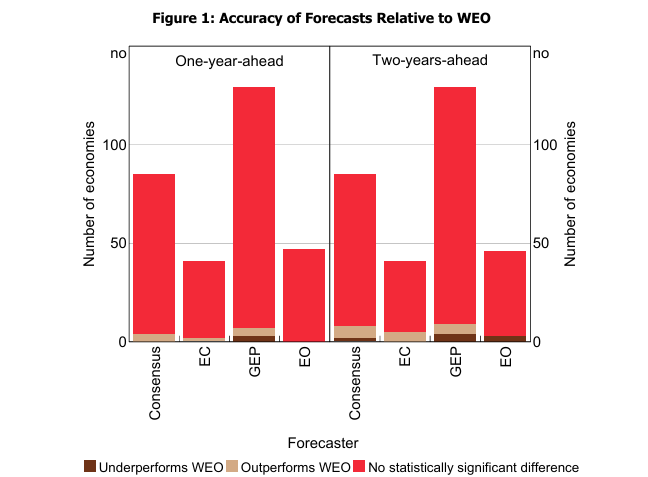
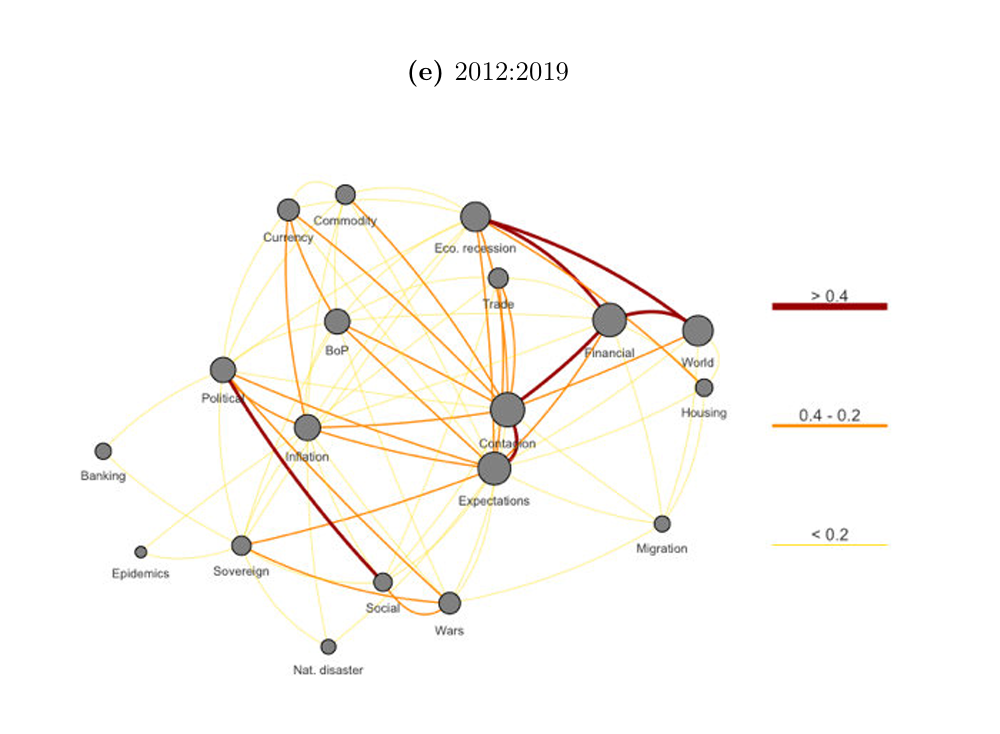
Three chapters on macroeconomic forecasting and financial crises. Chapter 3 shows that early warning systems for external crises fare relatively well in terms of forecasting performance, comparing global and domestic indicators and analysing output losses from missed versus predicted crises. Chapter 4 evaluates short-term forecasts of economic activity by major institutions and the private sector, examining how forecast errors correlate to the business cycle and touching on the political dimension of forecasting. Chapter 5 introduces a novel dataset of IMF archival documents — compiled via a manual dictionary and term-frequency approach — to measure how crisis discourse has evolved across the Fund's membership over decades.
Replication materials for all papers — data, code, and documentation — are available on my GitHub. I am committed to transparent and reproducible research.